Paris in Watercolor: Integrating Texturized Digital Brushes into a Professional Creative Workflow
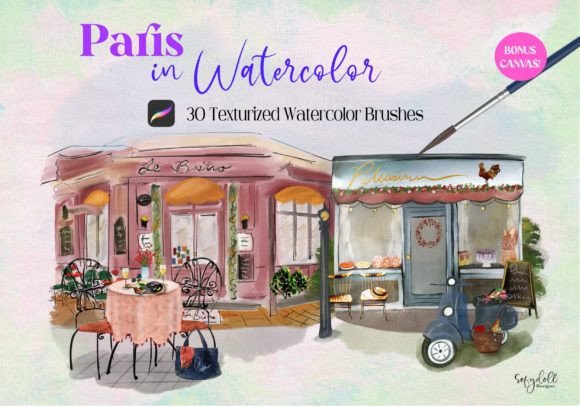
Digital illustration has evolved from a niche technical skill into a standard component of modern creative production. For professionals ranging from graphic designers and marketers to freelance illustrators and educators, the ability to produce high-quality, organic-looking artwork efficiently is no longer a luxury—it is a necessity. Paris in Watercolor represents a specific solution within this landscape, designed to bridge the gap between the unpredictable beauty of traditional media and the precision of digital tools. This brushset for Procreate offers texturized watercolors that allow creators to add depth and detail to their digital artwork with style and consistency.
Understanding how to integrate such a specialized tool into a broader workflow requires more than just downloading a file. It involves assessing where it fits in your project lifecycle, how it interacts with your existing asset library, and how it can streamline your output without sacrificing artistic integrity. This article explores the practical implementation of Paris in Watercolor, focusing on preparation, execution, and long-term utility in professional environments.
The Role of Specialized Brushsets in Modern Design Processes
In any creative workflow, efficiency is driven by the quality of your tools. Generic brushes often require extensive manual adjustment to achieve a realistic watercolor effect. You might spend hours layering opacity settings, adjusting flow, and manually adding grain to mimic paper texture. Paris in Watercolor eliminates this repetitive setup phase. By providing pre-configured, texturized brushes, it allows you to focus on composition and color theory rather than technical troubleshooting.
This tool fits seamlessly into various stages of a project. For marketers and small business owners, it can be used to create unique social media graphics that stand out against the sea of flat, vector-based designs. For educators and publishers, it offers a way to illustrate concepts with a hand-drawn warmth that engages readers. The key is recognizing that this is not just a collection of shapes, but a system for achieving a specific aesthetic outcome reliably.
Streamlining Setup and Organization
One of the most significant friction points in adopting new digital assets is the installation process. Many brush packs require users to import dozens of individual files, which can clutter the interface and disrupt the creative flow. Paris in Watercolor addresses this by delivering the entire collection in a single .brushset file. This means there is no need to import each brush individually. With one tap, the entire suite is integrated into your Procreate library, ready for immediate use.
From an organizational standpoint, this simplicity supports better workflow management. When working under tight deadlines, whether for a client presentation or a personal goal, minimizing administrative tasks is crucial. Having a unified brushset ensures that your tool palette remains clean and accessible. It also makes backing up your workspace easier, as you are managing one cohesive unit rather than scattered individual files.
Enhancing Depth and Detail in Digital Artwork
The core value proposition of this brushset lies in its ability to add depth and detail effortlessly. Traditional watercolor relies on the interaction between pigment, water, and paper. Replicating this digitally requires simulating those physical properties. The brushes in Paris in Watercolor are engineered to mimic these interactions, providing natural bleeds, granulation, and edge variations.
For creators, this means you can build complex layers of color without the result looking flat or artificial. Consider a scenario where you are designing a brand identity for a boutique hotel. Using these brushes, you can create background textures that evoke a sense of place and history, adding a tactile quality to digital deliverables. This level of detail enhances the perceived value of the work, making it suitable for high-end print materials as well as digital displays.
The Bonus Canvas Asset
A critical component of realistic watercolor simulation is the paper texture. The included Bonus Paris In Watercolor Canvas is not merely an afterthought; it is a foundational element of the workflow. By starting your project on this specific canvas, you ensure that the brush strokes interact with a surface that complements their design. This synergy between brush and canvas reduces the need for post-processing effects to add grain or texture, saving time and maintaining image quality.
Practical Implementation Across Different Workflows
To maximize the utility of Paris in Watercolor, it is helpful to consider how it integrates into different types of projects. Here are several practical applications:
- Content Creation and Blogging: Use the brushes to create custom headers and featured images. The organic look helps break the monotony of stock photography and establishes a unique visual voice for your blog.
- Educational Materials: Teachers and course creators can use these tools to illustrate diagrams and concepts. The hand-drawn aesthetic can make complex information feel more approachable and less intimidating.
- Product Design and Packaging: For small business owners, creating unique packaging designs is essential. These brushes allow for the creation of artisanal labels and wrappers that convey quality and craftsmanship.
- Personal Artistic Development: Hobbyists and aspiring artists can use the set to study watercolor techniques without the mess and cost of physical supplies. It serves as a low-risk environment for experimentation and skill building.
Compatibility and Technical Considerations
Before integrating any new tool, it is important to verify compatibility. Paris in Watercolor is designed specifically for Procreate on iPad. This specificity ensures optimal performance, as the brushes are tuned to the Apple Pencil’s pressure sensitivity and tilt features. Users should ensure their iPad model and Procreate version are up to date to take full advantage of the brush engine’s capabilities.
Furthermore, consider the resolution requirements of your final output. While digital brushes are scalable, the texture details are best preserved when working at high resolutions. For print projects, always set your canvas DPI to 300 or higher before beginning. This preparation step ensures that the granular details provided by the brushes remain crisp and clear in the final product.
Building Consistency and Quality Control
One challenge with organic-style brushes is maintaining consistency across multiple pieces. Because watercolor effects are inherently variable, two strokes may never look exactly the same. However, Paris in Watercolor provides a controlled range of variation. By sticking to the specific brushes within the set and using the bonus canvas, you establish a visual language that is recognizable and cohesive.
For teams or freelancers working with multiple clients, this consistency is vital. It allows you to develop a signature style that clients can rely on. Documenting your process—such as noting which brushes work best for shadows versus highlights—can further streamline future projects. Over time, this leads to a refined workflow where decision-making is faster, and output quality is more predictable.
Long-Term Value and Skill Development
Investing in a tool like Paris in Watercolor is not just about immediate project needs; it is about long-term skill development. As you become familiar with the nuances of the brushes, you will develop a deeper understanding of digital painting techniques. This knowledge is transferable and can enhance your overall versatility as a creator.
Moreover, the ease of use encourages frequent practice. When tools are intuitive and rewarding, you are more likely to engage with them regularly. This consistent practice leads to improvement in composition, color harmony, and digital dexterity. For entrepreneurs and marketers, this means having an in-house capability to produce high-quality visuals without relying on external agencies, thereby reducing costs and increasing agility.
Conclusion
Integrating Paris in Watercolor into your creative workflow offers a practical path to achieving sophisticated, texturized results with minimal friction. By eliminating the hassle of individual imports and providing a cohesive system of brushes and canvas, it allows you to focus on what matters most: creating compelling visual content. Whether you are enhancing a marketing campaign, illustrating educational materials, or pursuing personal artistic goals, this tool provides the depth and detail needed to elevate your work. Success lies not just in owning the tool, but in understanding how to weave it into your existing processes, ensuring efficiency, consistency, and high-quality outcomes in every project.